

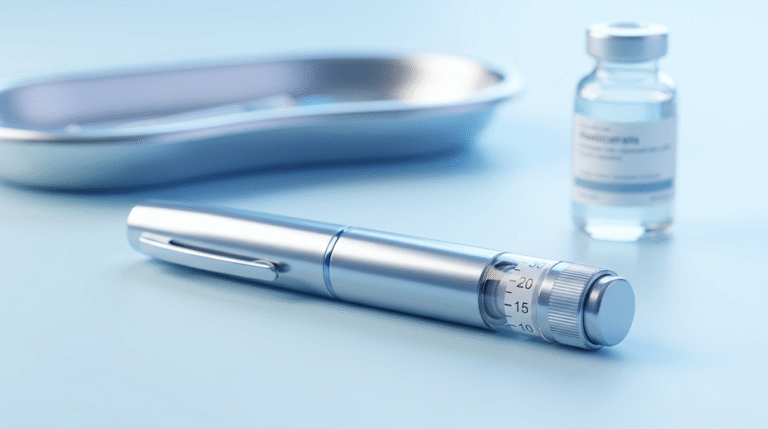
The prescribed milligram amount does not change when the container changes. Everything around it does: the handling, the written instructions, the storage clock and the training. The prescribing information tells clinicians to retrain patients whenever the presentation changes, which makes an unexpected substitution a reason to call rather than a reason to work it out alone.
Why substitutions happen
Rarely because someone reconsidered the clinical picture. Formularies are revised, a specific product code drops off a covered list, a pharmacy stocks one presentation and not another, a cash price moves, or a service changes suppliers. The trigger sits in a supply chain or a benefit design, and the patient finds out when a different box turns up.
Because the trigger is administrative, nobody in the chain necessarily treats it as a clinical event. That is the gap worth closing, since the label treats it as one.
Supplier changes are one of the more common triggers, and they look different depending on where the prescription lives. A retail pharmacy answers to its wholesaler, LillyDirect ships the branded presentations directly, and telehealth prescribers such as Ro, Hims and Hers and HealthRX each set their own sourcing, so the Zepbound presentation that arrives can shift when any of them changes a contract. Knowing which kind of provider filled the last box makes an unexpected substitution easier to trace, since these are unrelated companies with unrelated supply arrangements.
What the label expects before the first injection from a new container
Three instructions sit in the administration section. Patients and caregivers should be told which presentation they are receiving. They should get training appropriate to that specific presentation before starting. And if the presentation changes, they should be retrained and told to read the Instructions for Use written for the new one, rather than carrying technique across from the old one.
There is a further point for anyone moving to a vial: the label directs vial users to a syringe suited to the dose being given and to a new syringe and needle for every injection. That is a task the pen never asked of them, and the method for it belongs in the Instructions for Use packaged with that presentation and with the pharmacist or prescriber who dispensed it.
What changes and what does not
| Element | Moving pen to vial | Moving vial to pen |
|---|---|---|
| Weekly milligram dose | Unchanged | Unchanged |
| Volume injected | Differs between single-dose and four-dose formats | Differs between single-dose and four-dose formats |
| Steps before injecting | Adds a measuring and drawing step | Removes it |
| Supplies needed | A fresh syringe and needle each week | None beyond the carton |
| Instructions for Use | New document, read in full | New document, read in full |
| Storage clock | Resets to the rules for the new format | Resets to the rules for the new format |
| Sharps disposal | Needs arranging | Still needed for used pens |
The volume row is the one that catches people. Single-dose pens and single-dose vials hold each strength in 0.5 mL. The multi-dose vial and the KwikPen hold four weekly doses in 2.4 mL and are made at different concentrations, so the same milligram dose is a different amount of liquid. A number remembered from the previous container is not transferable to the new one.
The storage clock resets
Single-dose pens and single-dose vials are kept refrigerated and carry a total allowance of 21 days unrefrigerated at up to 30 degrees Celsius, after which they are discarded. Unopened multi-dose vials and KwikPens keep to their expiration date in the refrigerator, or 30 days if held at room temperature. Once opened, either is finished within 30 days of first use, within 30 days at room temperature, or after four weekly doses, and then thrown away even if solution remains. Nothing is frozen, and everything stays in its original carton away from heat and light.
Someone who switches from a four-dose format to single-dose units, or the reverse, is switching rulebooks. Habits built around one set of dates do not describe the other.
Questions worth asking before the next dose
Six questions cover most of it. Is the milligram dose the same as last month. Which presentation is arriving, in what pack size. Who is providing training for it, and when. Which Instructions for Use document applies. What the storage and discard dates are for this container. And who to contact if the label on the box does not match the prescription.
Two more are worth adding if cost drove the switch. Whether the change is permanent or a one-time fill, and what the price will be at the next refill rather than this one. Research on self-injection products has found that patients struggle to distinguish between similar devices, and separate work has shown that instruction wording itself measurably affects error rates, which is a reasonable argument for asking these questions out loud rather than assuming the box explains itself.
Where the switch conversation actually happens
It depends on the route. In a clinic, the prescriber and the dispensing pharmacist are both reachable. LillyDirect ships branded presentations to self-pay patients and the prescriber remains in the loop. Among telehealth services such as Ro, Hims & Hers, LifeMD, Noom and FormBlends, the relevant differences are whether a clinician reviews a format change before it ships, whether training is offered for the new presentation, and how quickly someone responds when a container arrives looking different from the last one.
Moving between branded product and compounded tirzepatide is not a format switch at all. Compounded tirzepatide is not FDA-approved, the concentration is set by the compounding pharmacy, and none of the branded storage windows, pack sizes or written instructions apply to it. That transition needs its own conversation with the prescriber and the pharmacy that filled it.
What not to do while waiting for an answer
Do not attempt to take more than one dose from a single-dose vial. It holds one dose and is not intended for repeat withdrawals, and treating it as a supply to be stretched is dose splitting. Do not share a KwikPen with anyone, even with a new needle, which the label prohibits outright. Do not use solution that looks discolored or contains particles. And do not improvise a technique from memory, a forum post or a video made for a different container.
Frequently asked questions
Does the dose need recalculating after a switch?
The milligram amount stays as prescribed. What differs is the volume that amount occupies, because single-dose and four-dose presentations are made at different concentrations. That is precisely why the label calls for retraining and for reading the Instructions for Use written for the presentation actually in hand.
Can a pharmacy substitute a format without telling the prescriber?
Practices and state rules vary, and substitutions driven by stock or formulary changes do happen. The reliable move is to check the carton against the prescription on collection, and to raise anything unexpected before the next scheduled injection rather than after it.
Is there a washout or gap needed between formats?
No gap is described for changing presentation of the same drug at the same dose. The usual weekly schedule continues. The labeling does set timing rules for missed and rescheduled doses, so a switch that delays an injection is a question for the prescriber, not something to solve by doubling up.
What if the new presentation is harder to manage than expected?
Say so early. Format is a prescribing choice that can be revisited, and difficulty with a drawing-up step is a clinical reason to change it rather than a personal failing. Continuing while unsure is how wrong amounts and missed weeks accumulate quietly.